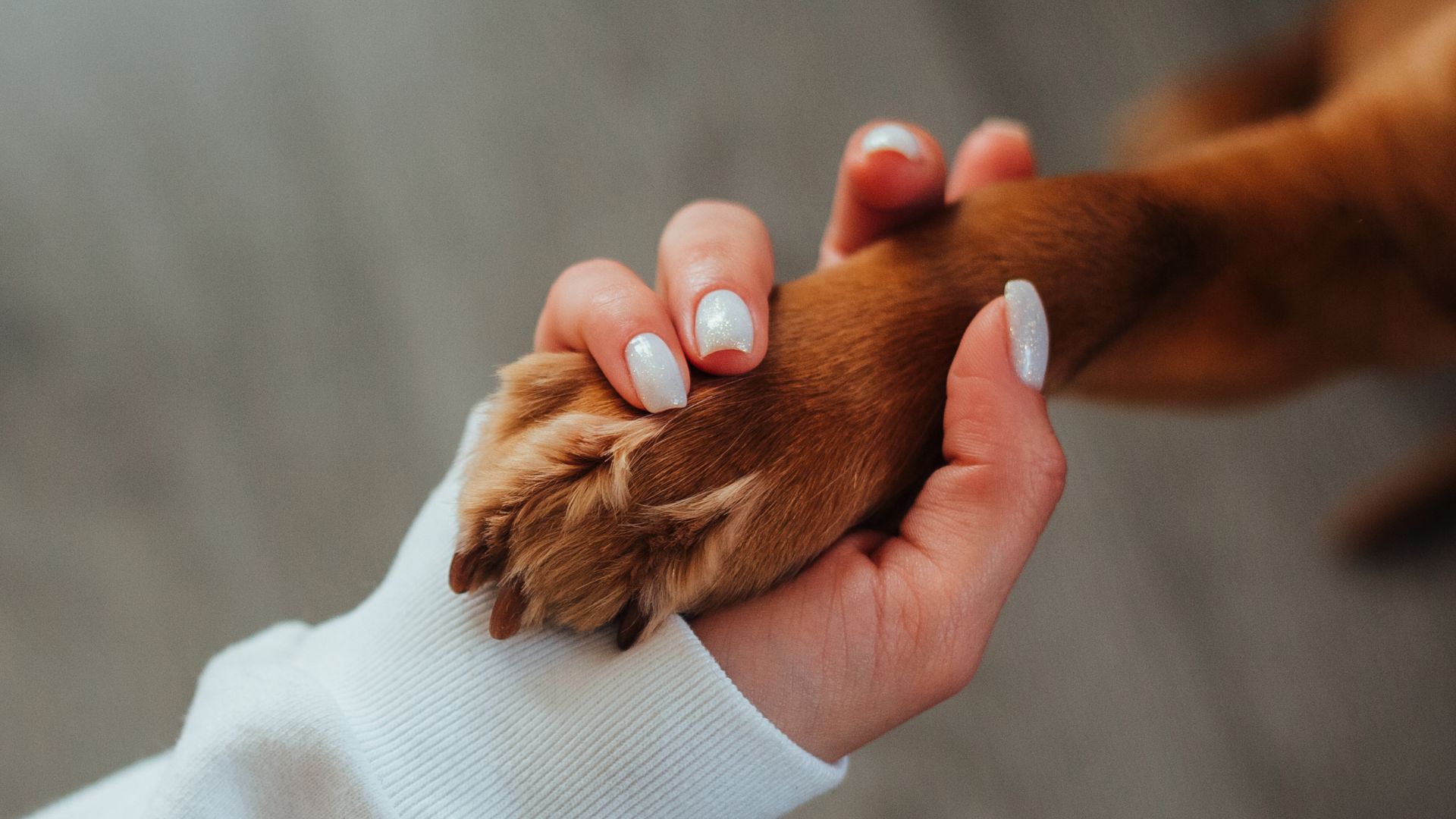
When a couple separate or divorce, emotions understandably run high. One issue that can cause particular distress and worry is what will happen to a much-loved dog, cat or other pet. The attachment and affection felt for a pet are often shared by both partners, which can make conversations about their future care particularly challenging. There is already so much to navigate during a separation or divorce, but concerns about what happens to a pet are valid and need to be addressed. In this article, we answer some of the most commonly asked questions about pets and divorce.
What happens to pets in a divorce?
There is no dedicated legal framework for deciding what happens to pets on divorce or separation, as there is for children or finances. As surprising as it may be to those of us who consider our pets integral members of the family, legally they are regarded as chattels, i.e. stuff! Whilst the court can deal with disputes regarding pets, it is usually preferable to agree arrangements outside of court where possible, avoiding the stress and legal costs associated with drawn-out legal proceedings.
Where this is not possible, there is a very old statute, the Married Women’s Property Act 1882, which can be invoked to deal with a dispute relating to chattels. In these cases, the court will try to establish legal ownership by considering factors such as who paid for the pet, whose name any pet insurance is in and who has paid for the pet’s food and other costs. However, there are many less tangible factors that are harder to assess within a legal framework that still treats pets as property, such as a child’s attachment to a pet or whether the legal owner has time to walk it.
There are recent examples of courts looking beyond who has the strongest ownership claim on paper. In FI v DO [2024] EWFC 384 (B), for example, the court considered who had cared for the dog since separation, where the dog was settled and the dog’s relationship with the children. However, there is very little case law in this area and the decision was based on the particular circumstances of that case, which included an alleged dog abduction, so it should not be assumed that another court would take the same approach.
The disconnect between how we view our pets and their status under the law is recognised by many within the legal community. Writing in the Financial Remedies Journal, District Judge Hatvany commented:
“In a legal system that prides itself on fairness and humanity, treating pets as chattels is both a relic and a betrayal. Has the time not come for the law to recognise the reality that animals are neither property nor mere ornaments in our lives?”

Whilst a number of countries across Europe, including Spain, France, Germany and Portugal, now give pets a different legal status from ordinary property or have legal mechanisms for dealing with them on divorce, it remains to be seen whether England and Wales will take a similar approach.
The treatment of pets on divorce or separation provides an excellent example of why non-court-based dispute resolution, such as family mediation, can be more effective for many separating couples. These processes provide greater flexibility and can be built around what matters most to you. Whilst the court may legally regard your pet as property, mediation gives you and your former partner the opportunity to consider their actual importance to your family and agree arrangements that reflect your individual circumstances.
If you put in place a pre-nuptial agreement prior to marrying, or a post-nuptial agreement after marriage, you can include in that agreement provisions for who pays for the outgoings associated with the pet and what would happen to the pet on divorce or separation. This is colloquially referred to as a ‘pet-nup’. Similarly, if you live with a partner but you are unmarried, you can put in place a cohabitation agreement, and this can include provisions for the pet. In my experience, it is rare for couples to put in place such agreements, and they seldom include provision for any pet, but it would be wise to consider this to try to avoid potential future disagreements about a very emotionally charged topic.
Can you get joint custody of a dog or other pet?
You cannot apply to the court for any sort of order dealing with the custody or contact arrangements for a dog or any other pet. You can agree between you to share the care of your pet, but this cannot be ordered by the court in the same way that the court can make such orders in relation to any children of the family. There is no equivalent for pets to the child arrangements orders the family court can make.
How can family mediation help?

In family mediation, the couple can discuss whatever issues are most pressing and worrying for them. Of course, the bigger picture needs to be dealt with, but family mediation provides the space and time for the couple to discuss matters which may not be explored in the same way through court proceedings, such as who keeps the dog.
Family mediation involves the couple sitting down in person or online with an independent third party, the mediator, to sort out their financial matters and/or child arrangements arising from their divorce or separation. Typically, mediation sessions last around 90 minutes and there are usually between three and six sessions. It is possible to work in separate spaces if being in the same physical or virtual room is not appropriate or safe.
I once mediated for a divorcing childless couple who owned a much-loved dog. The future arrangements for the dog, including the time they would each spend with her, were the topic of several mediation sessions. It was a sensitive situation as they both adored the dog and wanted to continue to be part of her life. Mediation enabled them to discuss the matter at a pace which suited them both. The ongoing costs of looking after the dog and the need for future housing with a garden were also key parts of the discussions. Whilst they were struggling to resolve many issues in respect of their divorce, they were united in their desire to ensure their dog was properly cared for. This helped keep them committed to resolving matters through mediation, where her needs could be considered.
If you are separating or divorcing and are concerned about what will happen to your pet, our experienced family law team can help you understand your options and work towards a practical resolution, whether through family mediation or our wider divorce and separation services.
Contact our divorce and separation solicitors to arrange a consultation →