











Section 21 notices are due to be abolished in England from 1st May 2026 under the Renters’ Rights Act 2025. With that date fast approaching, it is more important than ever for landlords and tenants to understand how section 21 works, the final deadlines involved, and what happens once the current regime comes to an end.
What is a section 21 eviction notice?
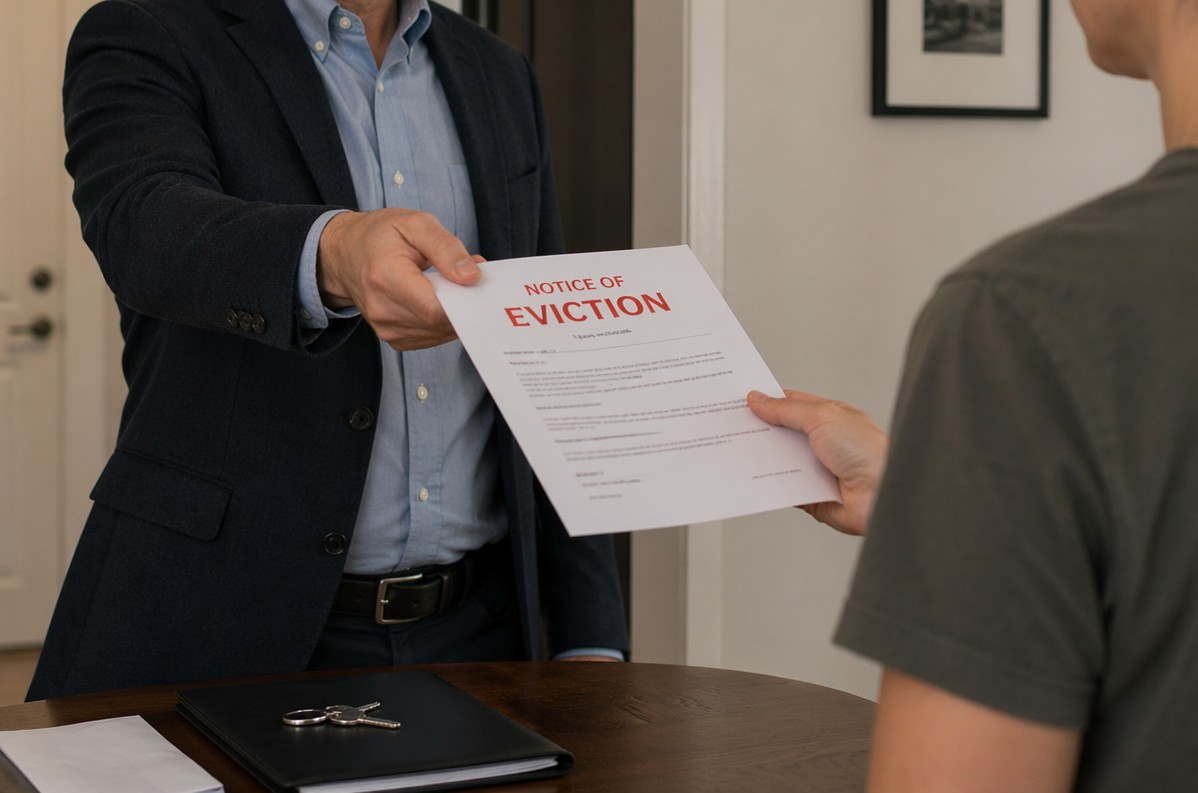
A Section 21 notice, under the Housing Act 1988, is a “no-fault” eviction notice used by landlords in England to end an Assured Shorthold Tenancy (AST) without providing a reason. In most cases, the tenant must be given at least 2 months’ notice. If the tenant does not leave, the landlord must then apply to the court for a possession order. If the tenant still does not leave after a possession order has been made, the landlord may then need to take enforcement steps, such as applying for a warrant of possession.
For a section 21 notice to be valid, a number of requirements need to be satisfied, including the following:
- At least 2 months’ notice must be given
- The notice cannot usually be served within the first 4 months of the tenancy
- The correct form must be used, usually Form 6A
- Tenancy deposit requirements must have been complied with including the prescribed information
- The tenant must have been given the prescribed documents, such as the Gas Safety certificate, EPC, EIPC and the relevant How to Rent guide
- The notice must not be barred by the retaliatory eviction rules or other statutory restrictions
- Licensing disclosure (If applicable)
Are section 21 evictions still legal in 2026?
Currently, section 21 evictions are still legal. The government has confirmed that the abolition of section 21 and the introduction of assured periodic tenancies will come into force on 1st May 2026. From that date, landlords will no longer be able to serve a section 21 notice in England.
What is the deadline to serve a 21 notice?
If a landlord wishes to rely on section 21, the notice must be served before 1st May 2026. In practice, that means it should be served no later than 30th April 2026, allowing properly for the method of service and any potential delay in receipt. GOV.UK also notes that if the earliest date possession proceedings could begin under the notice is on or after 1st August 2026, the notice will be invalid for the purposes of issuing possession proceedings.
What is the deadline to issue possession proceedings?
Serving a section 21 notice does not by itself entitle a landlord to remove a tenant from the property. If the tenant does not leave after the notice period expires, the landlord must apply to the court for a possession order. For section 21 notices served before 1st May 2026, court proceedings must usually be started by the earlier of:
- 31st July 2026, or
- The date falling 6 months after the notice was given.
If the landlord does not apply to court in time, the section 21 notice will become invalid, and the landlord will need to consider the section 8 route instead.
Important exemption – periodic tenancies where rent is paid less frequently than monthly
A standard section 21 notice requires a minimum 2-month period for the tenant to vacate the property before proceedings can be issued. However, if the tenancy is periodic and provides that rent is paid at intervals longer than the standard monthly payment (such as quarterly), then the notice period must be at least as long as the rental period.
For example, if rent is payable every 3 months under a contractual periodic tenancy, the notice period may need to be at least 3 months. In those cases, even if the notice is served before 1st May 2026, the landlord may still be unable to start section 21 possession proceedings if the relevant date falls on or after 31st July 2026.
What happens after section 21 is abolished, and what are your options as a landlord?
From 1st May 2026, once section 21 is abolished, landlords will no longer be able to seek possession without relying on a legal ground. The purpose of abolishing section 21 evictions is to afford greater protection to tenants and provide a more balanced relationship between landlord and tenant. As such, following their abolition, landlords will need to have a valid reason to evict a tenant under the new laws.
These reasons are contained within section 8 of the Housing Act 1988, and are commonly referred to as section 8 evictions. The grounds for evicting tenants under section 8 vary, but include non-payment of rent, anti-social behaviour and the landlord’s intention to sell the property.
Because the landlord has to evidence their grounds for eviction, the process for evicting tenants has historically been more expensive and time-consuming than section 21 notices. Because of this, landlords have generally preferred to serve section 21 notices, even when they have valid grounds to serve a section 8 eviction notice and recover any rent arrears.
Alongside the abolition of section 21 evictions, section 8 evictions are being reformed and expanded to be relied upon as the main legal mechanism for evictions moving forward. If you are a landlord or a tenant, it is important that you keep up with the new laws surrounding Section 8 evictions and seek legal advice if you are unsure.
I’ve received a section 21 notice. What are my rights as a tenant?
If your landlord served a section 21 notice before 1st May 2026, it may still be possible for them to rely on it, but only if it is valid and court proceedings are started in time.
It is vital to check whether the section 21 notice is valid and was served correctly, whether the right form was used, and whether all legal requirements were met including the prescribed information. If the notice is invalid and the deadline for serving section 21 notices has passed, the landlord will not be able to correct matters by serving a new section 21 notice after 1st May 2026.
A tenant may also be able to defend possession proceedings or ask the court for more time in some circumstances. If proceedings have already started before 1st May 2026, the previous rules may continue to apply while those proceedings are ongoing.
Frequently asked questions
Yes, but only before 1st May 2026.
In practical terms, no later than 30th April 2026.
31st July 2026, or 6 months from the date the notice was given.
Landlords will not usually be able to start section 21 possession proceedings until after that date.
No. If your landlord has not served you with a valid section 21 notice before 1st May 2026, they will need to rely on an alternative statutory ground for possession instead. If you are unsure whether the section 21 notice you have been issued is valid, it may be wise to seek legal advice.
There is no direct replacement for section 21 evictions, as the purpose of the Renter’s Rights Act 2025 is to give greater protection to tenants. Landlords will instead have to rely on section 8 evictions, which require a valid reason for evicting a tenant.
If you have questions around section 21 or 8 evictions, the validity of notices, possession proceedings, enforcement, or landlord and tenant disputes, please get in touch today for a fixed fee introduction interview with our expert litigation solicitors.